

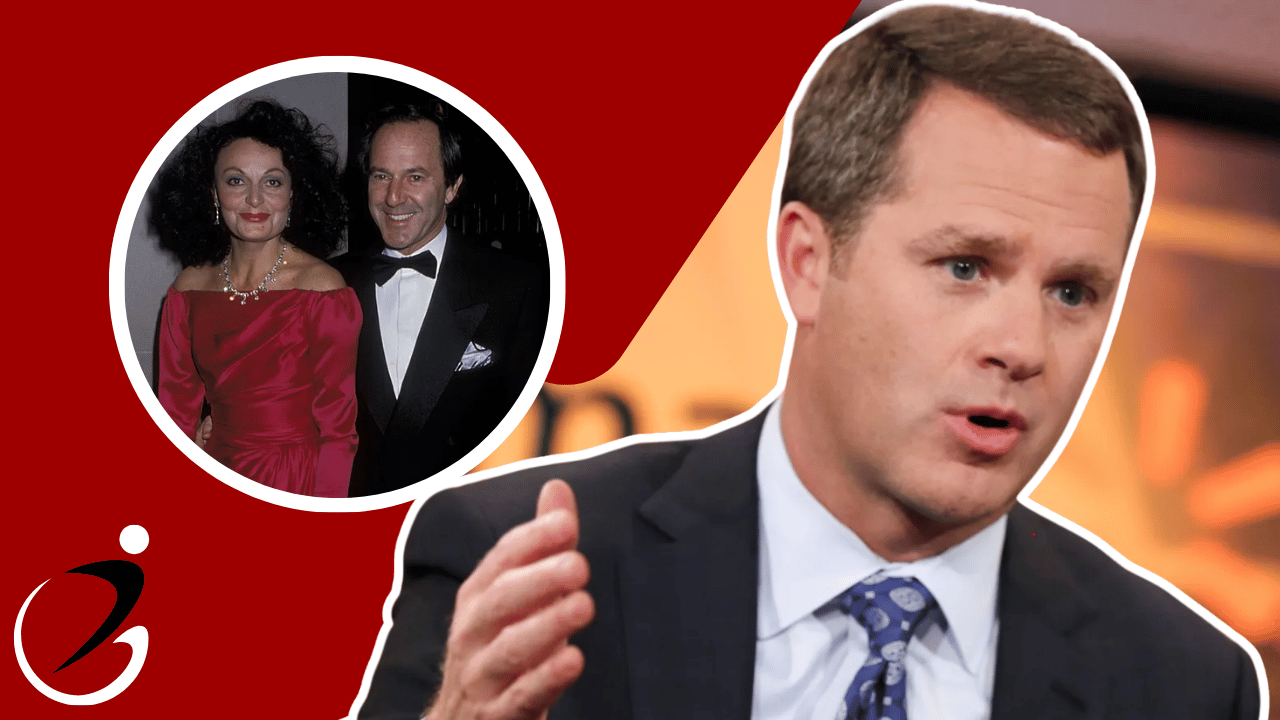
Diane von Furstenberg and Doug McMillon redefine modern leadership by shifting enterprise strategy from short-term financial gains to long-term systemic impact, human empowerment, and supply chain accountability. Their contrasting models in luxury fashion and global mass retail demonstrate how personal purpose and large-scale decarbonization transform modern corporate governance.
Core Leadership Philosophies of Von Furstenberg and McMillon
Modern executive leadership requires balancing commercial growth with broader societal responsibilities. Traditional management models often focused primarily on short-term quarterly earnings and direct profit margins. Diane von Furstenberg and Doug McMillon represent a structural pivot away from this narrow approach. They show that long-term enterprise value depends on building resilient operations, supporting human dignity, and addressing complex global challenges.
Von Furstenberg developed her business philosophy through independent entrepreneurship in the luxury fashion industry. She began her business career in 1972 by designing accessible, functional clothing for modern women entering the corporate workforce. Her leadership model relies on creative independence, personal authenticity, and female empowerment. She views commercial platforms as instruments to advance human rights, mentor future leaders, and protect artistic intellectual property.
McMillon built his leadership philosophy within the world’s largest corporate retail structure. He started his career in 1984 unloading delivery trucks at a regional distribution center before rising through operational management roles to become president and chief executive officer of Walmart. His leadership model relies on systemic scale, technological integration, and vendor network management. He uses the massive purchasing power of a global retail network to drive operational decarbonization, lower capital costs for sustainable suppliers, and improve supply chain efficiency across international markets.
Despite working in vastly different sectors, both executives reject passive management models. Von Furstenberg leads by personal influence, public advocacy, and values-based mentorship. McMillon leads by data infrastructure, supply chain accounting, and scalable performance metrics. Together, their leadership approaches illustrate how executives can transform corporate governance across both creative and operational industries.
Diane von Furstenberg and Purpose-Driven Brand Leadership
Diane von Furstenberg launched her namesake fashion label in New York in 1972. Her rise as an entrepreneur established a new precedent for female executive leadership in an industry where top executive and creative roles were historically dominated by men.
The Business Impact and Cultural Evolution of the Wrap Dress
In 1972, von Furstenberg designed the jersey wrap dress. The garment served as a practical solution for millions of women entering professional workplace environments during the 1970s. It combined freedom of movement, easy maintenance, and form-fitting professional style at an accessible price point. The wrap dress became an immediate commercial success, selling in the millions and establishing DVF as a major business enterprise.
By 1976, at the age of 29, von Furstenberg appeared on the cover of Newsweek magazine, which recognized her as the most marketable female business figure in fashion since Coco Chanel. The wrap dress proved that a single commercial product could deliver strong sales while carrying cultural meaning for female independence. After restructuring her enterprise, she relaunched the brand in 1997, turning DVF into an international lifestyle label operating across more than 70 countries.
Corporate Governance at the Council of Fashion Designers of America
Von Furstenberg served as Chairwoman of the Council of Fashion Designers of America from 2006 to 2019. During her 13-year leadership tenure, she expanded the trade association from a regional advocacy group into an influential global governing body.
Her governance framework focused on three primary policy areas:
- Emerging Designer Support: She expanded mentorship programs and established financial grant structures to guide young designers through early business development. Programs such as the CFDA Fashion Incubator provided emerging entrepreneurs with cheap studio spaces, industry contacts, and retail launch assistance.
- Intellectual Property Rights: She led legal advocacy campaigns urging government regulatory bodies to pass stricter design protection laws. Her goal was to protect independent designers from unauthorized fast-fashion copying and counterfeit intellectual property theft.
- Ethical Supply Chains and Worker Welfare: She championed fair trade practices and advocated for formal ethical standards across garment manufacturing operations. She urged trade members to eliminate worker exploitation in overseas factories and adopt environmentally safe textile processing practices.
Her leadership stabilized the American fashion ecosystem and established governance blueprints that continued under subsequent chairs, including Tom Ford and Thom Browne.
Philanthropic Frameworks and International Impact
Beyond commercial design, von Furstenberg built philanthropic initiatives designed to provide long-term support for women leaders around the world. In 2010, she co-founded the DVF Awards alongside the Diller-von Furstenberg Family Foundation. The organization awards annual financial grants and organizational backing to women who demonstrate exceptional courage in leading human rights campaigns, civic initiatives, and social innovations.
She serves on the board of directors for Vital Voices, a global non-profit organization that identifies, mentors, and empowers emerging female leaders across developing nations. Her public advocacy and leadership have earned major international awards. She was inducted into the National Women’s Hall of Fame in 2019, named a Chevalier de la Legion d’Honneur in France in 2020, and named a Commandeur de l’Ordre de la Couronne in her native Belgium in 2021.
Her philanthropic work also includes civic infrastructure and urban planning projects in New York City. Through the Diller-von Furstenberg Family Foundation, she helped finance the restoration of the High Line public park, the construction of the Little Island public space, and the creation of the Statue of Liberty Museum on Liberty Island. Her career and civic contributions were celebrated globally in the 2023 museum exhibition Woman Before Fashion and the 2024 documentary film Diane von Furstenberg: Woman in Charge.
| Milestone Year | Leadership Focus Area | Operational and Governance Achievement |
| 1972 | Product Innovation & Brand Launch | Founded DVF in New York and introduced the jersey wrap dress for working women. |
| 1976 | Market Expansion & Media Recognition | Featured on the cover of Newsweek after selling millions of wrap dresses globally. |
| 1997 | Corporate Restructuring | Relaunched DVF into a global lifestyle label operating in over 70 countries. |
| 2006–2019 | CFDA Trade Governance | Served as Chairwoman, establishing IP protection campaigns, incubator programs, and ethical trade standards. |
| 2010 | Global Philanthropy | Created the annual DVF Awards to grant capital and mentorship to international women leaders. |
| 2019–2021 | Global Civic Honors | Inducted into the National Women’s Hall of Fame and received French and Belgian state honors. |
Doug McMillon and Industrial Scale Supply Chain Governance
Doug McMillon provides a model for corporate executive leadership operating within massive enterprise scale. Managing a global retail organization with over two million employees requires moving beyond standard management hierarchies. McMillon aligned corporate purchasing decisions with long-term climate targets, using supplier partnerships to drive industrial decarbonization.
The Mechanics and Scope of Project Gigaton
In 2017, McMillon launched Project Gigaton. The program set a target to cut, avoid, or sequester one billion metric tons (one gigaton) of greenhouse gas emissions from Walmart’s global product supply chain by 2030. The environmental impact of removing one gigaton of emissions equals taking over 211 million passenger vehicles off the road for an entire year or matching the annual national carbon footprint of Japan.
The initiative was based on rigorous carbon accounting metrics. Internal assessments showed that direct operational emissions from retail stores, warehouses, and delivery fleets (Scope 1 and Scope 2 emissions) were small compared to the upstream and downstream emissions generated by third-party product suppliers (Scope 3 emissions). Project Gigaton created a formal system to track and cut Scope 3 emissions across global manufacturing networks.
Walmart organized Project Gigaton across six core operational areas:
- Energy Efficiency and Renewable Power: Encouraging suppliers to audit factory energy use, upgrade industrial equipment, and shift to clean electricity sources.
- Nature and Sustainable Agriculture: Supporting soil conservation, regenerative farming practices, landscape restoration, and zero-deforestation sourcing policies.
- Packaging Redesign: Working with consumer packaged goods companies to remove unnecessary plastic, reduce box weights, and move toward 100 percent recyclable or reusable materials.
- Waste Diversion: Helping manufacturing facilities eliminate landfill waste, upcycle manufacturing leftovers, and reduce organic food waste in processing plants.
- Logistics and Transportation Optimization: Improving delivery truck load distribution, reducing empty transport miles, and switching to zero-emission delivery fleets.
- Product Design and Circularity: Formulating retail products using recycled fibers, low-impact chemicals, and designs that extend product lifespans.
Implementation Infrastructure and Supplier Financial Incentives
Project Gigaton did not rely on strict corporate mandates or penalties. Instead, Walmart built a digital platform called the Sustainability Hub to give suppliers the technical resources needed to measure and reduce their environmental impact. The hub offers carbon calculators, implementation toolkits, expert webinars, and industry workshops.
To drive global vendor participation, Walmart backed the program with financial incentives and group purchasing opportunities:
- Green Supply Chain Financing: Partnering with financial institutions such as HSBC, Walmart offered lower interest rates on working capital loans for participating suppliers that set clear climate targets and reported validated emissions reductions.
- Group Renewable Power Procurement: Through programs like the Gigaton PPA initiative with Schneider Electric, smaller suppliers combined their energy demands to sign joint power purchase agreements for solar and wind energy, securing cheaper clean power rates they could not access alone.
- Preferred Vendor Status and Recognition: Suppliers reporting substantial emissions reductions earned official corporate recognition, including “Sparking Change” and “Giga Guru” titles. This recognition increased vendor standing with internal Walmart purchasing managers, opening expanded retail distribution opportunities.
In February 2024, McMillon announced that participating suppliers had passed the one-billion-metric-ton goal six years ahead of the original 2030 deadline. More than 5,900 global suppliers joined the program, representing roughly 75 percent of Walmart’s net product sales dollars in the United States.
Operational Decarbonization and Organizational Leadership
While guiding external vendors through Project Gigaton, McMillon set ambitious environmental standards for Walmart’s internal operations. The company committed to reaching zero direct emissions across its facilities and vehicle fleet by 2040 without using carbon offsets.
By 2024, nearly 50 percent of Walmart’s global electricity demands were met by renewable energy sources, including onsite solar panels, utility green power contracts, and wind energy agreements. This shift proved that large-scale discount retail logistics can transition toward clean power while maintaining low everyday prices for consumers. Planned executive transitions, including incoming leadership appointments, ensure these sustainable supply systems remain core operational priorities.
| Program Metric | Performance Target Data | Measured Operational Impact |
| Program Launch Year | 2017 | Established Scope 3 supplier engagement program. |
| Target Deadline | 2030 | Completed in February 2024 (6 years early). |
| Total Emissions Reduced | 1 Billion Metric Tons (1 Gigaton) | Exceeded 1 billion metric tons of greenhouse gases avoided. |
| Active Vendor Count | Open to all global suppliers | Over 5,900 participating companies worldwide. |
| U.S. Sales Dollar Coverage | Target majority of inventory footprint | Reached ~75% of Walmart U.S. product net sales dollars. |
| Internal Electricity Target | 100% renewable power by 2035 | Reached nearly 50% global clean electricity by 2024. |
| Internal Operational Target | Zero emissions by 2040 | Direct facility Scope 1 and 2 decarbonization without offsets. |
You may also like: Personal Life David and Rebecca Muir
Comparative Analysis of Leadership Frameworks
Comparing Diane von Furstenberg and Doug McMillon shows how modern leadership strategies operate across different commercial environments. Von Furstenberg uses creative authority, voice, and personal mentorship to transform behavior. McMillon uses operational systems, capital incentives, and purchasing power to change industrial operations.
Von Furstenberg’s strategy shows the power of purpose-driven brand building. By designing functional garments for working women, she tied commercial products directly to social change. Her work at the Council of Fashion Designers of America demonstrated that trade association leadership requires protecting creative rights, advocating for worker welfare, and mentoring independent entrepreneurs.
McMillon’s strategy shows how global corporations can drive environmental change across international supply lines. Rather than using top-down mandates, he built collaborative systems that made sustainability financially advantageous for third-party vendors. Project Gigaton succeeded because it offered suppliers access to cheaper loan rates, group clean energy contracts, and increased product placement within retail stores.
Both leaders demonstrate that modern executive governance extends beyond managing internal financial accounts. Von Furstenberg influenced trade regulations, cultural standards, and civic developments. McMillon transformed supply chain management, vendor relations, and international carbon accounting practices.
| Leadership Dimension | Diane von Furstenberg Framework | Doug McMillon Framework |
| Industry Sector | Luxury Fashion, Retail Design, & Philanthropy | Mass-Market Global Retail & Logistics |
| Primary Strategy | Entrepreneurial Purpose & Cultural Advocacy | Systemic Scale & Supply Chain Integration |
| Execution Mechanism | Personal Influence, Trade Governance, & Mentorship | Sustainability Hub, Financial Loans, & Vendor Badges |
| Primary Audience | Independent Designers, Working Women, & Civic Leaders | Global Manufacturing Suppliers & Commercial Buyers |
| Stakeholder Impact | Empowered Women, Protected IP, & Ethical Garment Standards | Cut 1 Billion Metric Tons of Scope 3 Emissions |
| Long-Term Legacy | CFDA Trade Standards & DVF Foundation Grants | Industrial Decarbonization Model for Global Supply Chains |

Industrial Policy and Standard-Setting Impact
The leadership models created by von Furstenberg and McMillon have established new operational standards across modern business environments. Their actions demonstrate how single enterprise initiatives can alter industry regulations and market expectations.
Transforming Fashion Industry Governance
Von Furstenberg changed how trade associations address intellectual property protection, labor rights, and talent development. Before her leadership at the Council of Fashion Designers of America, independent fashion houses lacked structured legal protection when dealing with fast-fashion companies copying their original designs.
Through long-term advocacy in federal legislative bodies and trade panels, she made creative design protection a central policy priority for domestic fashion retail. She also advanced sustainable manufacturing standards, encouraging brands to track raw material origins and enforce fair wage policies across global supply networks. Her tenure proved that creative brand leadership must be supported by legal governance, worker dignity, and transparent supply chains.
Redefining Retail Decarbonization Standards
McMillon altered how large corporations approach supply chain sustainability and environmental disclosures. Historically, corporate climate reports focused primarily on direct energy use at owned retail stores and warehouses, ignoring the vast carbon footprint generated during raw material extraction and product manufacturing by overseas vendors.
By building Project Gigaton around Scope 3 emissions, McMillon set a new benchmark for corporate climate programs. Walmart proved that large retail organizations can actively guide third-party manufacturers to measure, report, and reduce their greenhouse gas emissions. Reaching the one-billion-ton reduction goal six years early forced competing global retailers to establish similar vendor engagement platforms, supply chain financing programs, and third-party carbon tracking targets.
| Policy & Industry Domain | Historical Business Baseline | Modern Leadership Benchmark |
| Fashion Design IP Protection | Limited protection against fast-fashion design theft. | Organized trade advocacy and legal protection frameworks. |
| Retail Emissions Reporting | Tracking direct facility energy and fleet fuel only (Scope 1 & 2). | Mandatory tracking of third-party supplier footprints (Scope 3). |
| Supplier Compliance Models | Top-down contractual mandates without technical support. | Shared digital calculators, group energy deals, and cheap capital loans. |
| Mentorship & Industry Grants | Informal, localized professional networks. | Structured international awards, incubator grants, and non-profit support. |
Strategic Lessons for Corporate Executives
Analyzing the strategic trajectories of Diane von Furstenberg and Doug McMillon provides clear management principles for executives leading modern business enterprises.
Align Product Offerings with Societal Value
Von Furstenberg built a lasting enterprise by designing products that directly solved everyday problems for working women entering corporate environments. Executive leaders must assess whether their primary commercial products align with real societal changes. Products that combine functional performance with positive social values build strong brand loyalty and withstand changing economic conditions.
Build Shared Partner Incentives Over Direct Mandates
McMillon’s execution of Project Gigaton proves that securing supplier cooperation across international networks requires shared economic incentives rather than punitive measures. Business leaders managing complex vendor networks should provide shared digital tools, preferential financing terms, and joint energy purchasing options. Aligning third-party business incentives with enterprise environmental goals speeds up operational adoption across international supply lines.
Create Institutional Governance That Outlasts Executive Tenure
Both leaders built permanent governance structures designed to function beyond their individual operational management terms. Von Furstenberg expanded the policy scope of the Council of Fashion Designers of America and created long-term foundation grants to support future generations of female leaders. McMillon embedded decarbonization tracking directly into Walmart’s procurement systems, vendor rating rubrics, and buyer evaluation metrics. Effective enterprise leadership requires establishing institutional systems that maintain operational standards long after executive transitions occur.
You may also like: Christopher Knight Tribute Jennifer Runyon
