

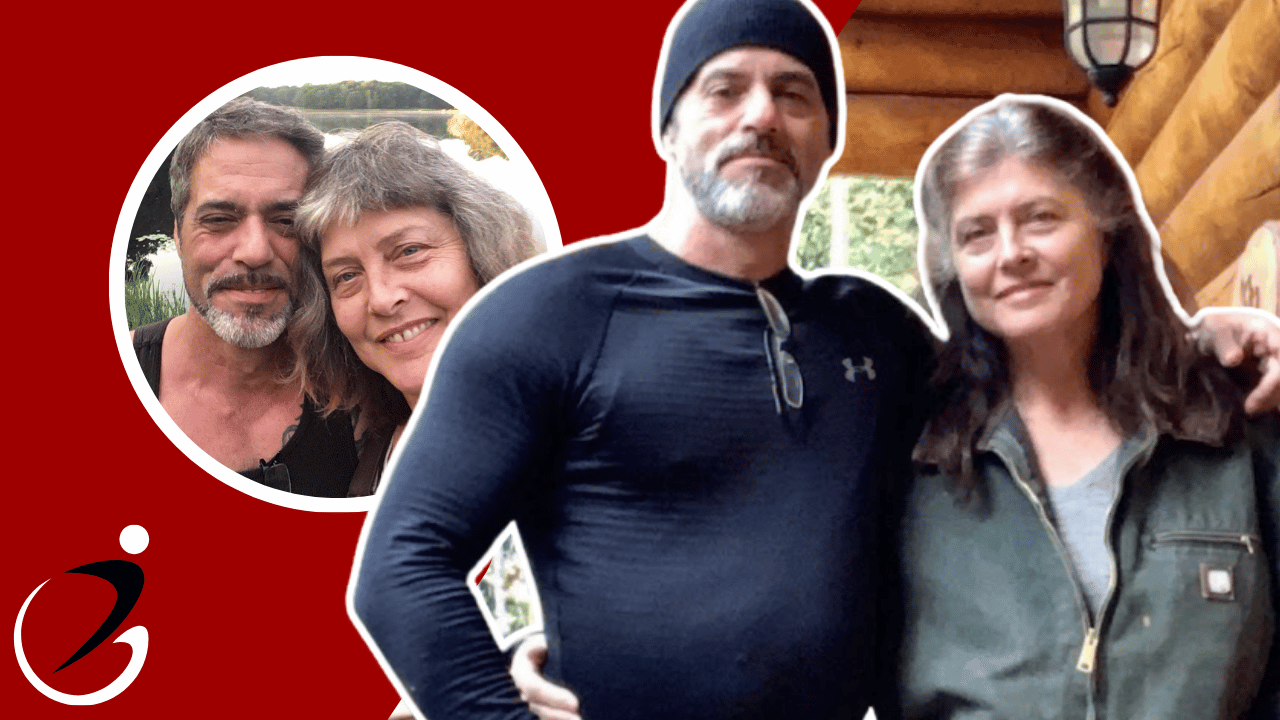
Michael G. Heinrich is the partner and fiancé of Life Below Zero star Sue Aikens. He works in information technology and digital management in the eastern United States while maintaining a long-distance relationship with Aikens.
Who Is Michael Heinrich
Michael G. Heinrich is best known as the long-term romantic partner of Sue Aikens, the breakout television personality from National Geographic’s survival series Life Below Zero. While Aikens gained worldwide recognition for living alone in the remote Alaskan wilderness, Heinrich has built a professional career in the digital technology sector. He specializes in information technology, digital communications, network management, and web design. Heinrich resides primarily in the eastern United States, with long-standing professional ties to the New York and New Jersey areas.
Unlike Aikens, who spent decades in front of television cameras, Heinrich chooses to live as a private citizen. He does not work in reality television or professional wilderness guiding. When Life Below Zero was actively filming on location at Kavik River Camp, Heinrich elected not to become a regular cast member. He preferred to keep his personal and professional life separate from television production schedules, offering support to Aikens away from public view.
The couple first met through mutual acquaintances and built a personal connection over several years. As their relationship developed, they became engaged. Although fans of the show frequently ask about Aikens’ domestic life, Heinrich maintains a quiet profile, focusing on his technology career while sharing his life with Aikens.
Managing a Long Distance Relationship
Sustaining a long-distance relationship between the eastern United States and northern Alaska involves severe geographic and environmental obstacles. For over twenty years, Sue Aikens lived as the sole year-round resident of Kavik River Camp. The camp is situated on the North Slope of Alaska, positioned 197 miles north of the Arctic Circle. The total physical distance separating New York and Kavik River Camp exceeds 3,000 miles.
To keep in daily contact, Heinrich and Aikens rely heavily on satellite communications infrastructure. Standard cell phone towers do not exist in the North Slope tundra. Aikens installed a commercial satellite internet system at her camp, which allows her to make voice calls, exchange messages, and run live webcams. These digital channels allow the couple to communicate consistently despite the physical distance between them.
Physical visits occur during specific weather windows. During the summer months, weather conditions permit light aircraft to land safely on the gravel runway at Kavik River Camp. Heinrich travels to Alaska during these operational periods to spend time at the camp. During the harsh winter months, when temperatures drop to minus 60 degrees Fahrenheit and polar darkness sets in, travel becomes rare, requiring the couple to depend entirely on satellite connections.
Following the cancellation of Life Below Zero in February 2025, Aikens began transitioning away from full-time solitude in the Arctic. Heinrich and Aikens have coordinated plans to acquire new real estate properties, allowing them to spend more time together in less isolated locations.
Personal and Professional Profile Comparison
| Profile Feature | Sue Aikens | Michael G. Heinrich |
| Primary Profession | Wilderness Camp Owner, Author, TV Star | Information Technology Specialist |
| Claim to Fame | Lead Cast Member on Life Below Zero[cite: 1, 8] | Partner and Fiancé of Sue Aikens |
| Primary Base Location | Kavik River, Alaska | Eastern United States (New York Area) |
| Public Figure Status | High Visibility Media Figure | Private Citizen |
| Relationship Status | Engaged | Engaged |
| Media Appearances | 23 Seasons of Life Below Zero[cite: 8] | Non-cast member / Private |
The Marital History of Sue Aikens
Before her engagement to Michael G. Heinrich, Sue Aikens was married three times. Each past marriage represented a distinct era in her life, marked by personal growth as well as profound loss.
Her first marriage occurred when she was a young woman in her early twenties. Shortly after the marriage, her first husband was diagnosed with an advanced brain tumor. Despite receiving medical treatment, he succumbed to the illness and passed away. This sudden loss left Aikens a young widow and shaped her early resilience.
Her second marriage lasted for seventeen years. This relationship was her longest marriage and produced two children, a son and a daughter. Over time, fundamental differences regarding where and how to live created distance between the spouses. Her second husband preferred a traditional suburban lifestyle with standard city amenities. Aikens felt an overwhelming desire to live in remote natural environments. The couple eventually agreed to divorce, with her former husband remaining in the contiguous United States while Aikens relocated permanently to Alaska.
Her third marriage was to Eddie Ganthier. The couple lived together in Alaska, sharing the responsibilities of wilderness homesteading. However, Eddie Ganthier suffered from deteriorating health conditions and passed away. Facing widowhood for a second time, Aikens decided to remain in Alaska permanently. She focused her energy on running Kavik River Camp independently, choosing not to marry again for many years until meeting Michael Heinrich.
Detailed Chronology of Sue Aikens Relationships
| Relationship Order | Name of Partner | Key Life Event / Outcome |
| First Marriage | Undisclosed | Ended due to husband passing away from a brain tumor |
| Second Marriage | Undisclosed | Ended in divorce after 17 years; produced two children |
| Third Marriage | Eddie Ganthier | Ended due to husband passing away in Alaska |
| Current Engagement | Michael G. Heinrich | Long-term partner and fiancé |
Children and Grandchildren of Sue Aikens
Sue Aikens is the mother of two adult children. She has one daughter and one son from her seventeen-year second marriage. Both of her children were raised primarily away from the extreme isolation of Arctic Alaska. They chose to establish their adult lives, careers, and households in conventional communities within the United States.
Aikens is also a grandmother to three grandchildren. Because she lived thousands of miles away at Kavik River Camp, she maintained close family ties using satellite phone calls, digital messaging, and video chats. She scheduled annual trips off the tundra to visit her children and grandchildren in person. Family friends and young visitors have also spent time at Kavik River Camp during the summer months, learning outdoors skills directly from Aikens.
Early Life and Childhood Abandonment
Sue Aikens was born on July 1, 1963, in Chicago, Illinois. She spent her early childhood years in the suburban neighborhoods of Chicago. Her family life was unstable, marked by neglect and frequent domestic conflict.
In 1975, when Aikens was twelve years old, her mother moved her to Alaska. Shortly after arriving in the state, her mother abandoned her on a bare plot of land located nearly fifty miles outside of Fairbanks, Alaska. Left alone with no money, food, or adult supervision, the twelve-year-old child had to figure out how to survive in the wilderness.
Aikens found shelter in a small, abandoned cabin near a creek. She taught herself to hunt small animals, trap for food, cut firewood, and haul water. She walked into the nearest town to enroll herself in public school, recognizing that attending school guaranteed her access to regular meals and basic education. These traumatic early experiences established her self-reliance and prepared her for a life of extreme solitude.

Kavik River Camp Location and Business Operations
Sue Aikens established her permanent base at Kavik River Camp in the early 2000s. The camp is situated on Alaska’s North Slope at exact GPS coordinates 69.4 N latitude and 146.54 W longitude. The outpost is located 197 miles north of the Arctic Circle, 500 miles from the nearest city, and 80 miles from the nearest paved road.
The camp serves as an essential safety and refueling station for bush pilots flying between Fairbanks and the Arctic Ocean. The facility includes a maintained gravel airstrip, large aviation fuel storage tanks, guest sleeping quarters, a main dining tent, and repair workshops. Aikens operates Kavik River Camp as a commercial business from May through September. During these open months, she hosts scientific research teams, wildlife photographers, and hunting groups.
From September through May, commercial operations shut down completely. Aikens remains as the sole resident at the outpost, making the official winter population of Kavik exactly one. Winter weather brings temperatures dropping to minus 60 degrees Fahrenheit, accompanied by months of continuous darkness. During this season, Aikens manually maintains diesel power generators, clears heavy snow drifts, repairs broken equipment, and defends her camp perimeter against wild predators.
Key Operational Metrics of Kavik River Camp
| Operational Factor | Metric / Statistical Fact |
| Geographic Coordinates | 69.4 N, 146.54 W |
| Distance North of Arctic Circle | 197 Miles |
| Distance to Nearest City | 500 Miles |
| Distance to Nearest Road | 80 Miles |
| Winter Population | 1 Resident (Sue Aikens) |
| Commercial Operating Window | May through September |
| Winter Temperature Minimums | Below -60° Fahrenheit |
| Primary Access Transport | Bush Plane / Gravel Runway |
Television Career on Life Below Zero
National Geographic premiered Life Below Zero on May 19, 2013. Produced by BBC Studios, the documentary reality series followed various individuals and families living off-grid across remote regions of Alaska. Sue Aikens was chosen as one of the central figures of the show due to her unique position as the solitary warden of Kavik River Camp.
The show became an international television hit, running for 23 seasons and 325 episodes. It earned multiple Primetime Creative Arts Emmy Awards for outstanding cinematography and picture editing. Cast members were compensated between $2,000 and $4,500 per episode. Over twelve years of continuous filming, Aikens earned a steady income from the show, which allowed her to purchase fuel, upgrade machinery, and maintain her camp infrastructure.
During her time on the show, Aikens engaged in a public legal battle with the production company. Producers instructed her to drive a snowmachine onto dangerous river ice to film an action scene. The machine crashed, throwing Aikens onto the ice and causing severe injuries. Aikens filed a lawsuit against the network, arguing that production crew members put her life in danger for entertainment value. She won the legal judgment and continued appearing on the show until National Geographic officially ended the series on February 23, 2025.
The 2007 Grizzly Bear Attack
In 2007, Sue Aikens survived a catastrophic attack by a male grizzly bear at Kavik River Camp. The attack is recognized as one of the most severe survival incidents recorded on Alaska’s North Slope.
Aikens walked down to the Kavik River to fill water containers using an engine-powered water pump. A wild grizzly bear was hiding in the brush near the riverbank and ambushed her without warning. The bear bit down on her head, crushing part of her skull, and dragged her across the tundra. The attack tore open muscle tissue in her legs and dislocated both of her hips.
When the bear temporarily released her, Aikens pulled herself back to her cabin using only her arms. She was unable to walk due to her leg injuries. Once inside her cabin, she used a mirror, needle, and thread to sew her facial and scalp wounds together. She also manually popped her dislocated hips back into place.
Bad weather grounded local aircraft, and her radio equipment was damaged during the attack. Aikens lay injured on her cabin floor for ten days before a local pilot landed at the camp runway and found her. She was evacuated to a hospital in Fairbanks, where surgeons performed multiple operations. After months of physical therapy, she recovered her mobility and returned to live alone at Kavik River Camp.
Life After Television and Recent Projects
Following the end of Life Below Zero in 2025, Sue Aikens expanded her career as an author and public speaker. In March 2026, she released her official memoir titled North of Ordinary: How One Woman Left It All Behind for Wilderness and Wonder in Alaska’s Frozen Frontier. She wrote the book in partnership with Canadian author Michael Vlessides.
The autobiography provides a detailed account of her childhood abandonment, her past marriages, her bear attack, and her decades spent living 197 miles north of the Arctic Circle. To support the book release, Aikens embarked on a promotional tour across North America, presenting live talks and meeting readers.
At age 63, Aikens continues to adapt her living arrangements. She is actively developing new property investments alongside her fiancé, Michael G. Heinrich. While she no longer films daily television episodes, she maintains her ties to Alaska while spending more time traveling, writing, and living with Heinrich.
You may also like: Crystal Renee Hayslett Husband
